I used to think of warehouse sustainability as an ESG slide in the corporate deck. In 2026 it's a line item in the project budget, usually with regulation sitting behind it and finance checking the math.
The stakes
Green logistics is already a 1.43 trillion dollar market in 2024, heading to 2.61 trillion by 2034. Freight and warehousing together account for at least 7 percent of global greenhouse gas emissions, and warehouses alone contribute 11 percent of logistics-related emissions. That's a big enough share that nobody in the value chain can claim to be a bystander.
Energy efficiency is still the cheapest lever
LED lighting cuts warehouse energy use by up to 80 percent. Prologis set a 100 percent LED target across its 984 million square foot global portfolio for 2025, and hit it. Operators rolling out AI-assisted energy management are reporting 30 percent energy cost reductions and 20 percent faster order processing as a side effect.
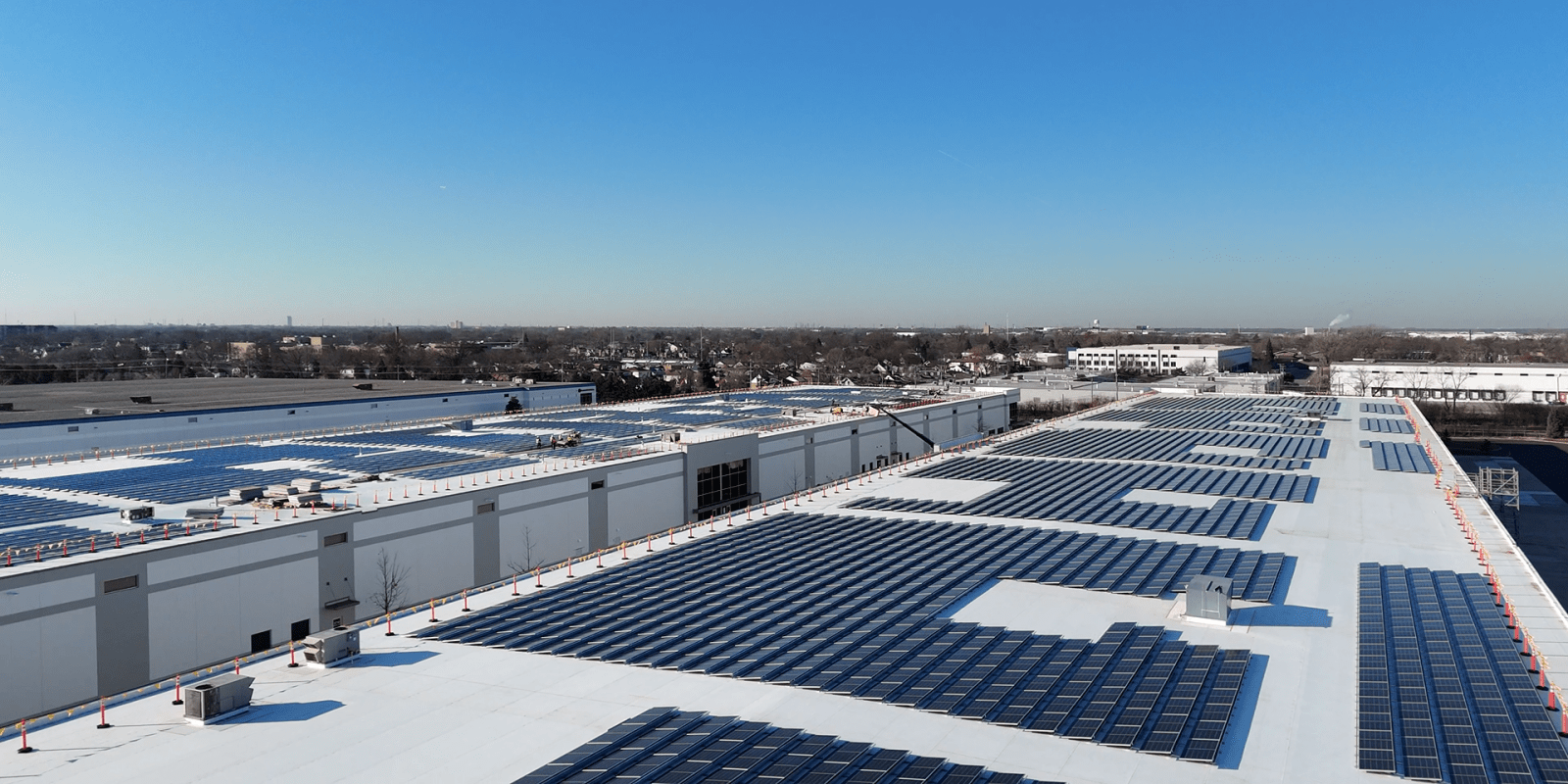
The more ambitious move: Prologis announced a plan to install 2 GW of solar capacity across its warehouse portfolio. Amazon reached 100 percent renewable energy matching across its global operations, including fulfillment centres, back in 2023, which was seven years ahead of its original 2030 target.

Electric forklifts crossed the threshold
- Market size: 72.12 billion dollars in 2025, 80.42 billion in 2026, CAGR 11.5 percent
- In Europe, electric forklifts are now over 70 percent of new unit sales
- Lithium-ion is displacing lead-acid fast, with roughly three times the lifespan and lower maintenance cost
If you're specifying a greenfield warehouse in 2026 and the MHE plan still assumes diesel or lead-acid, you're working off the wrong numbers.
Regulation, not ESG reports, is what moved the needle
The EU's Carbon Border Adjustment Mechanism (CBAM) went live on January 1, 2026. The Corporate Sustainability Reporting Directive (CSRD) is in force. The Corporate Sustainability Due Diligence Directive (CSDDD) now requires companies to identify, prevent, and mitigate environmental and human rights impacts across their global value chains. In the US, California SB 253 Scope 1 and 2 reporting starts in 2026, with Scope 3 following in 2027.
The practical effect: sustainability is now a line item in solution design that can fail a project approval on its own. Three years ago it was a bullet in the executive summary. Now it's a number in the P&L.